De La Salle Brothers overseeing Kilqubon
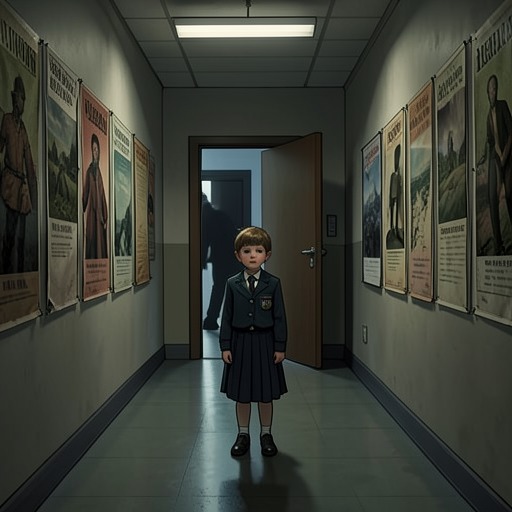
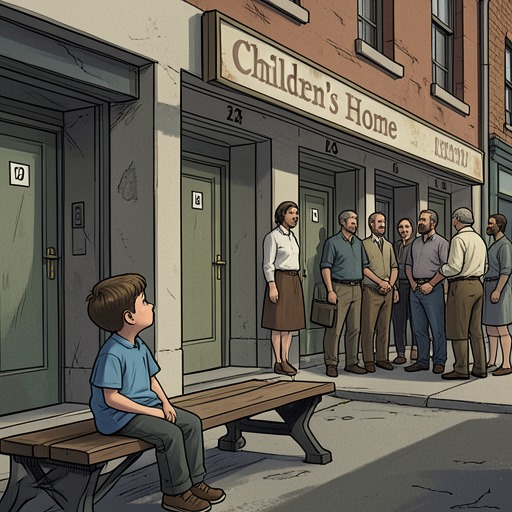
Say NothingDe La Salle Brothers overseeing Kilqubon ran the boys’ home at Kircubbin, where the McConville children were sent after their mother, Jean McConville, disappeared. The institution’s wide grounds and Victorian buildings concealed a coercive environment: a government investigation later found a culture of physical force, while abuse within the home left the children exposed to violence from staff and older boys alike.
The Home at Kircubbin
In 1973, eleven-year-old Michael McConville and his nine-year-old brother Tucker McConville were moved from Nazareth Lodge to the De La Salle home near Kircubbin, in County Down. The institution occupied a converted Victorian mansion and newer cottages across 250 acres. Its open countryside was a sharp contrast with the brick-and-concrete confines of Belfast, but the breadth of the grounds did not mean freedom for the children living there.
The move followed the McConville children’s removal from their family home after Jean’s disappearance. Michael repeatedly escaped and ran back to Belfast, believing he needed to be there in case his mother returned. Each time he and Tucker were brought back, they were beaten. After the boys ran away so often, staff took away their shoes, hoping bare feet would slow them if they reached the country road.
Violence, Bullying and Forced Labor
A later government investigation found that a culture of physical force had pervaded the establishment. Monks and lay employees used violence on what the account describes as the merest pretexts: children were punched, struck with belts and lashed across the knuckles with a thin wooden cane. The De La Salle Brothers’ home was also a place where older children, already accustomed to its violent norms, bullied Michael and Tucker without mercy.
The boys’ clothing reinforced their loss of dignity. The Brothers bought clothes in bulk, leaving children in shirts with sleeves above the elbow and oversized adult trousers held up by belts. Staff also put the children to work, sometimes hiring them out to nearby farms to pick potatoes. These details made the home’s discipline material and daily: the children were not only punished, but also dressed and used according to the institution’s terms.
Sexual Abuse and Institutional Silence
Sexual abuse was widespread. During evening television, monks in long robes would direct certain children to sit on their laps. At night, Michael watched from beneath his covers as adults entered the dormitory with a torch and removed sleeping boys from their beds. The account states that Michael himself was not molested; it does not spare him the knowledge of what was happening around him.
The danger continued when the seven-year-old twins Billy McConville and Jim McConville were transferred from Nazareth Lodge. They became the youngest children at Kircubbin, were assaulted by older boys, and Billy was sexually abused by adults. The children had little recourse: so many staff members were implicated in molesting children that the abuse was silently tolerated. One former resident said the De La Salle Brothers “were in it together,” a characterization that conveys the residents’ sense that there was no safe adult to whom they could turn.
Recognition and Consequences
The authorities may not have understood the predatory conditions inside Kircubbin, but children continued to be sent there. The brothers later admitted that widespread sexual abuse had taken place at the home during this period. That admission, alongside the government investigation’s findings on physical violence, establishes that the children’s accounts concern institutional patterns rather than isolated incidents.
The effects extended beyond the home. Some of the McConville children developed a fear of priests that persisted into adulthood; even seeing a man of the cloth could make them anxious. Kircubbin thus appears not simply as a difficult placement after family loss, but as another institution that compounded the children’s vulnerability. Michael’s later transfer to Lisnevin, where he found a kindly nun who looked out for him, offers a contrast to Kircubbin’s abuse, but does not undo what he and his siblings endured there.